ServicesInvisalign / Clear Aligners
Invisalign and Clear Aligners in Grafton
Clear aligners move crooked or crowded teeth with a series of thin, removable trays. We plan your treatment around the health of the teeth and gums you already have, then help you keep the result with a simple retainer routine.
Straighter teeth that are easier to care for
Crowded or overlapping teeth trap plaque in spots a toothbrush and floss struggle to reach. Over time that can mean more cavities, sore gums and uneven wear. Straightening them with clear aligners is often less about looks and more about making your teeth easier to keep healthy for decades.
Each set of trays shifts your teeth a small amount. You wear them most of the day, take them out to eat and brush, and move to the next set on the schedule we give you. Because they come out, cleaning stays normal, which is one reason many adults and teens prefer them to fixed braces.
We have been in practice over 11 years, and we treat aligners as part of your overall dental care, not a separate project. Before anything moves, we make sure your cleanings, fillings and gums are in good shape so the teeth we straighten stay strong.
What your aligner treatment includes
A full exam first
We check for cavities, gum health and bite problems before planning any tooth movement. If you need a cleaning or a filling, we take care of it first so nothing gets sealed under a tray.
Records and a treatment plan
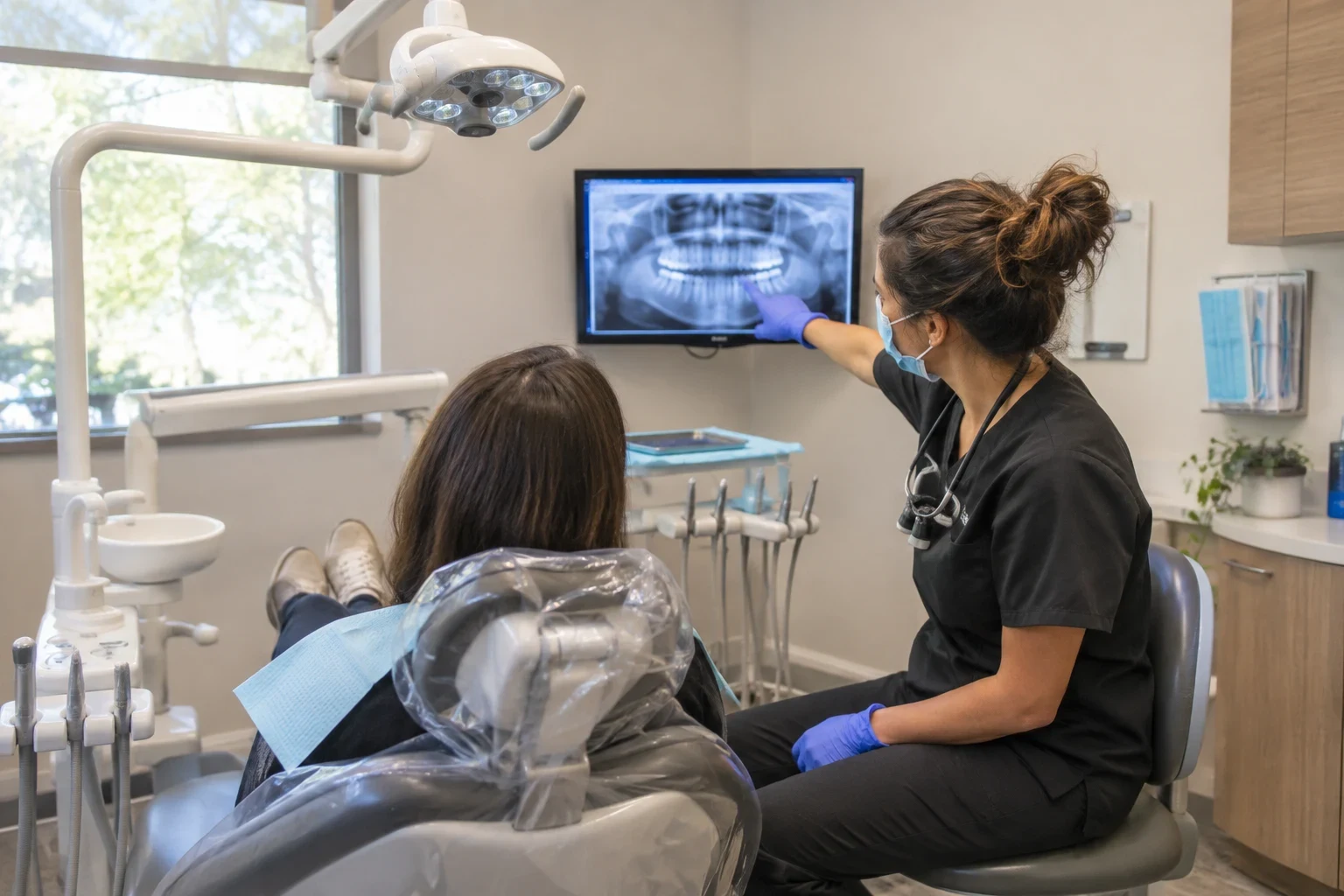
We take photos, x-rays and impressions or a scan of your teeth. From these we map out how your teeth will move, roughly how many trays you will need and what the finished smile should look like.
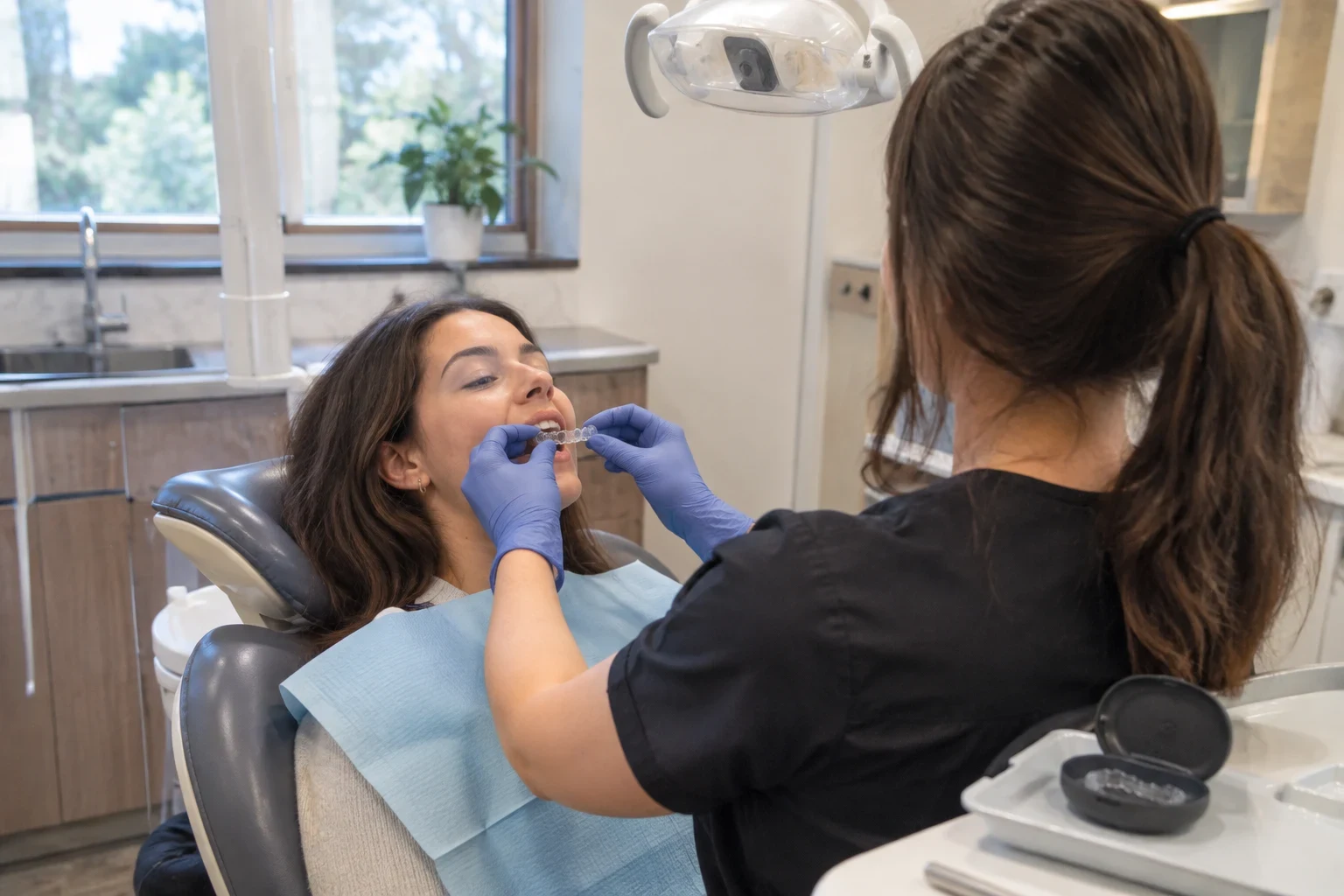
Fitting your first trays
We show you how to put the aligners in and take them out, and how to clean them. Some patients need small tooth-colored bumps added to certain teeth so the trays can grip and guide them.
Progress checkups
We see you every several weeks to confirm teeth are tracking as planned. If a tooth lags behind, we can adjust the plan before it becomes a bigger delay.
Retainers to hold the result
Teeth tend to drift back after treatment. We fit you with retainers and explain how often to wear them so your new alignment stays put.
Signs clear aligners may be right for you
- Food keeps catching between teeth
- Crowded, overlapping teeth hold on to food and plaque. Lining them up can make flossing faster and cleanings simpler.
- Teeth drifted after old braces
- Lots of adults wore braces as kids, then let the retainer slip out of their routine. Aligners are a common way to guide those teeth back into place.
- Chips, worn spots or sensitivity
- A crooked bite puts extra pressure on a few teeth instead of spreading it evenly. Over the years those teeth can chip, wear down or become sensitive.
- Gaps that bother you
- Spaces between the front teeth can slowly get wider. Aligners can close many of these gaps a little at a time.
- You hide your smile in photos
- Feeling good about your smile counts too. If crooked teeth make you hold back, an exam will show you what is possible.
How treatment works, step by step
- 1
Consultation and exam
We look at your teeth, gums and bite, talk through what bothers you and tell you honestly whether aligners are a good fit. If another option would serve you better, we will say so.
- 2
Planning your movement
Using your records, we build a plan that shows the number of stages and an estimated timeline. You see the plan before you commit.
- 3
Wearing the trays
You wear each set for the time we recommend, usually most of the day and night, switching to the next set on schedule. Expect some pressure for a day or two with each new set.
- 4
Checkups and finishing
Regular visits let us confirm progress and order refinement trays if a tooth needs extra help. When the teeth are where they belong, we move you into retainers and back to your normal cleaning schedule.
What affects the cost of clear aligners
No two aligner cases move the same way, so we wait until after your exam and records to give you a clear estimate instead of guessing over the phone. To help with the cost, we accept most dental insurance plans. Patients without coverage can look at our Office Dental Plan for patients without insurance, and the CareCredit Patient Payment Plan lets you spread payments out over time.
- How far the teeth need to travel
- Closing a small gap or easing mild crowding takes fewer trays than correcting how your upper and lower teeth meet. More stages add time and add to the total.
- Treatment needed first
- A cavity, inflamed gums or a cracked tooth should be handled before any trays go in. We price that work on its own, and it keeps the teeth sound while they move.
- Refinement trays
- Now and then a tooth moves slower than the plan predicted. Extra trays to finish the job can raise the cost, and we talk about that possibility before you start.
- Retainers once you finish
- A retainer is what keeps your straighter smile from drifting. Ask how replacement retainers work so they are part of your budget from the beginning.
- What your plan covers
- Some insurance plans carry orthodontic benefits, often with separate limits. We can go over what your plan lists so you know where you stand before treatment begins.
Questions about Invisalign and clear aligners
- How long do the aligners need to be in each day?
- Plan on keeping them in for roughly 20 to 22 hours out of every 24. They come out for meals, for any drink besides water, and for brushing. Leaving them out too long is the most common reason treatment takes longer than expected.
- Do aligners hurt?
- Expect a snug, pressing feeling for a day or two each time you start a new set. That tightness means your teeth are moving as planned. It tends to ease quickly, and most patients find they only need over-the-counter pain relief briefly, if at all.
- How long does treatment take?
- A simple case can wrap up in several months, while a more involved one may run a year or longer. Once your plan is built, we give you an estimated timeline, and regular checkups help you stay on it.
- Will my teeth move back after treatment?
- They can, and that is the reason retainers are so important. We show you how to wear and clean yours, and we look at your alignment during your regular cleanings so any small shift is caught early.
- Can my teenager use clear aligners?
- Plenty of teens do well with aligners once their adult teeth have come in. The bigger question is whether they will keep the trays in as directed. We talk that over with you and your teen at the exam.
Find out if aligners fit your smile
An exam is the first step. We will look at your teeth, answer your questions about time and cost, and give you a plan you can take home and think over.