ServicesExtractions
Tooth Extractions in Grafton, MA
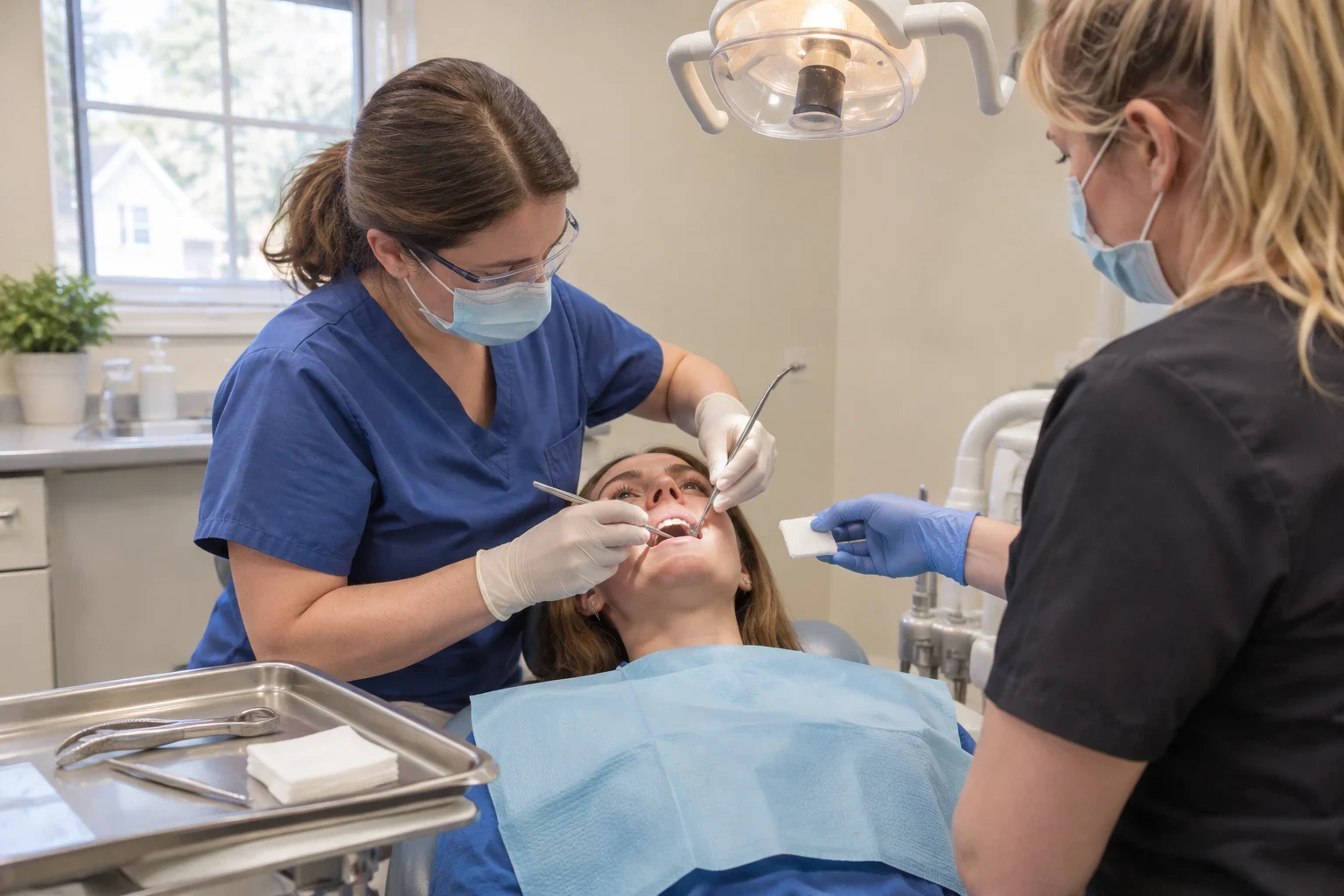
When a tooth is too damaged, infected or crowded to keep, we take it out gently and plan what comes next. You get a clear explanation before we start, a well-numbed and comfortable visit, and aftercare that protects the healthy teeth around the gap.
Removing one tooth to protect the rest
We would always rather save a tooth than remove it. A filling or a crown can often rescue a tooth that looks bad at first glance, and we will tell you when that is the better route. Extraction becomes the right call when a tooth is cracked below the gumline, decayed past the point a restoration can hold, loosened by advanced gum disease, or crowding its neighbors.
Over 11 years in practice have shown us how much the months after an extraction matter. An open space lets nearby teeth drift and tilt, and the tooth above or below it can slowly push into the gap. So every extraction here comes with a plan for the space, whether that means a bridge, making sure a child's adult tooth has room to come in, or simply a schedule of checkups.
We see families from Grafton, Shrewsbury, Westborough and the surrounding area for simple extractions, wisdom teeth that are causing trouble, and baby teeth that refuse to come out on their own.
What your extraction includes
Exam and X-rays first
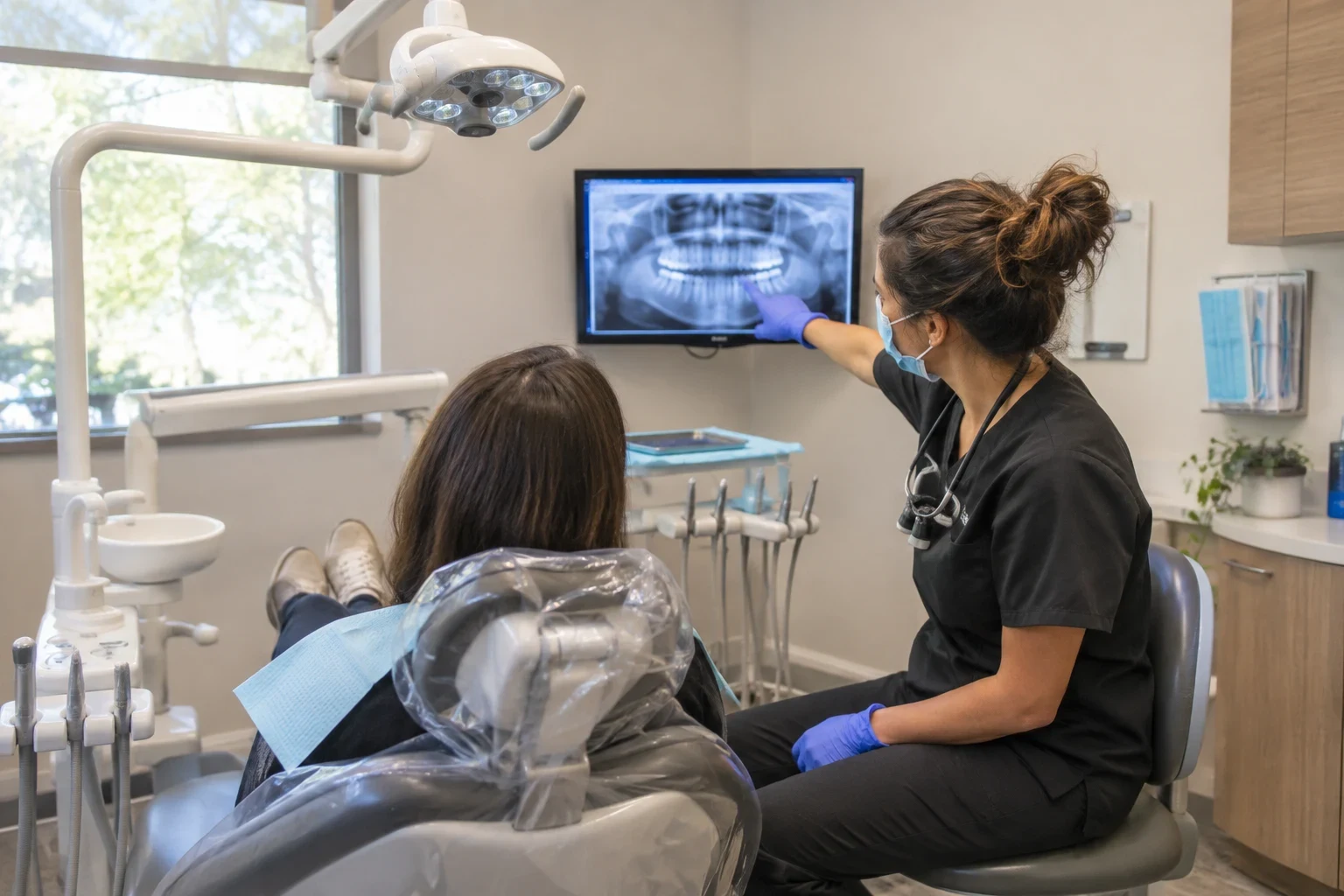
Before recommending anything, we look at the root shape, the bone around the tooth, and how close it sits to nerves and the sinus. That picture tells us whether the removal will be simple or needs more care.
An honest keep-or-remove answer
If the tooth can be saved with a filling or a crown, we say so and show you why on the X-ray. You decide with the full picture in front of you.
Thorough numbing
The area is numbed with a local anesthetic, and we check that it has fully taken hold before any work starts. Feel something sharp? Raise your hand and we pause right away.
Careful removal
We loosen the tooth gradually instead of forcing it, which helps preserve the surrounding bone and gum. Healthy bone matters later if you choose a bridge or other replacement.
Written aftercare instructions
You leave with clear notes on gauze, eating, rinsing and what to avoid, like straws and smoking, so the healing clot stays in place.
A follow-up check
We see you back to confirm the site is healing well and to talk through options for the space.
Signs a tooth may need to come out
- Pain that keeps coming back
- A tooth that aches on and off for weeks, or throbs when you lie down, often has trouble deep inside. Sometimes it can still be saved, so it is worth an exam sooner rather than later.
- A crack below the gum
- Cracks that run down into the root usually cannot be sealed. You might notice pain only when biting on one spot.
- A loose adult tooth
- Adult teeth should not wiggle. Looseness often points to gum disease or bone loss around the root.
- Swelling or a bad taste
- Puffy gums, a small bump near one tooth, or a sour taste that will not rinse away can mean infection that needs attention.
- Wisdom teeth causing trouble
- Wisdom teeth that are partly through the gum trap food and are hard to clean, which can lead to decay on the molar next door.
- A baby tooth hanging on
- When an adult tooth is coming in behind or beside a baby tooth that will not budge, removing the baby tooth can give the new one room.
How an extraction visit goes
- 1
Your phone call
Let us know which tooth hurts and how long it has been bothering you. We set up a visit that fits your schedule and remind you to bring things like your insurance card.
- 2
A close look and a clear plan
We check the tooth, take X-rays and walk you through what the images show. When removal is the best option, you hear each step and the cost before we begin anything.
- 3
Numbing and removal
After the area is completely numb, we ease the tooth loose and lift it out. Simple extractions are often quicker than patients expect, and we keep checking how you feel the whole time.
- 4
The first day afterward
You bite down on gauze so a clot can settle into the socket. Then you follow our written notes on soft foods and gentle cleaning that leaves the area undisturbed.
- 5
Healing check and next steps
At the follow-up visit we confirm the gum is closing as it should. We also talk through whether filling the space makes sense to keep your other teeth from moving.
What shapes the price of an extraction
We go over the cost with you before any work begins, so your share is settled before you take a seat in the chair. We accept most dental insurance plans. Patients without coverage can ask about our Office Dental Plan for patients without insurance, and the CareCredit Patient Payment Plan lets you pay over time.
- How the tooth sits
- When the whole crown of the tooth is visible and intact, removal tends to be straightforward. A tooth that has snapped off, has curved roots or is still tucked beneath the gum calls for a surgical approach with more time and care.
- Which tooth and how many
- A single-rooted front tooth is a different task than a molar anchored by several roots. Taking out more than one tooth at the same visit also changes the total.
- Imaging before treatment
- If you are a new patient or the source of the problem is not clear yet, we may need extra X-rays to plan the removal safely.
- What fills the space
- Some extractions need no follow-up work at all. Others are best paired with a bridge, which we list as its own step in your treatment plan.
- What your plan pays
- Insurance plans vary in how much they cover for extractions. We review your benefits together so you know what to expect before treatment starts.
Questions about tooth extractions
- Will it hurt?
- You should feel pressure during the extraction, not sharp pain. We confirm the area is numb before starting, and you can raise a hand to pause at any time. Expect some soreness for a few days, which most patients manage with the over-the-counter pain relief we recommend.
- How long does healing take?
- Most gums close over the socket in about a week or two. The bone beneath takes several more months to rebuild fully, but you will not feel that part. The first day is the most important stretch: rest, skip straws and smoking, and rinse gently so the clot stays put.
- Do I need to replace the tooth?
- Not always. Wisdom teeth and some baby teeth need no replacement. For a back molar or a visible tooth, leaving the gap can let neighbors drift and change your bite, so we often suggest a bridge. You can read more on our Crowns & Bridges page.
- Can you take out wisdom teeth?
- Often, yes. Wisdom teeth that have come through the gum can usually be removed in our office. If X-rays show a tooth deeply buried or sitting close to a nerve, we will tell you honestly if a specialist is the better choice.
- My child's baby tooth won't come out. Should it be pulled?
- Many stubborn baby teeth fall out with time, but if the adult tooth is already coming in behind it, removing the baby tooth can help. We check with an X-ray first and keep the visit calm and gentle. Our Kids' Dentistry page covers more about how we care for younger patients.
- When can I go back to work?
- Many patients return to desk work the next day. If your job is physical, plan for a day or two of lighter activity, since heavy lifting and hard exercise can restart bleeding early on.
Let's take a look at that tooth
An exam tells you whether a troublesome tooth can be saved or should come out. Book an appointment and we will walk you through the options before anything happens.